
If you are an off-grid passenger, Flexible solar panel microcracks Probably your biggest hidden concern. For RV enthusiasts, the roof is a mobile powerhouse, but modern RV design presents a significant engineering challenge: uneven and curved surfaces. While flexible modules address aerodynamic requirements, the mechanical stress of bending often leads to its development. Flexible solar panel microcrackswhich can silently destroy your energy harvest.
Many homeowners worry that walking on their roof or installing panels on a high contour arc will trigger these cracks. But Singold Solarwe have dealt with the root cause. Flexible solar panel microcracks Not through cell-level shifting, but revolutionary Composite Materials Engineering.
Physics of Failure: Why Flexible Solar Panels Form Microcracks
Solar cells are essentially thin wafers of silicon – a brittle material similar to glass. When you bend a standard module to fit a curved RV roof, the internal silicone is subject to stress, which is its primary driver. Flexible solar panel microcracks.
“Walking” danger and pressure points
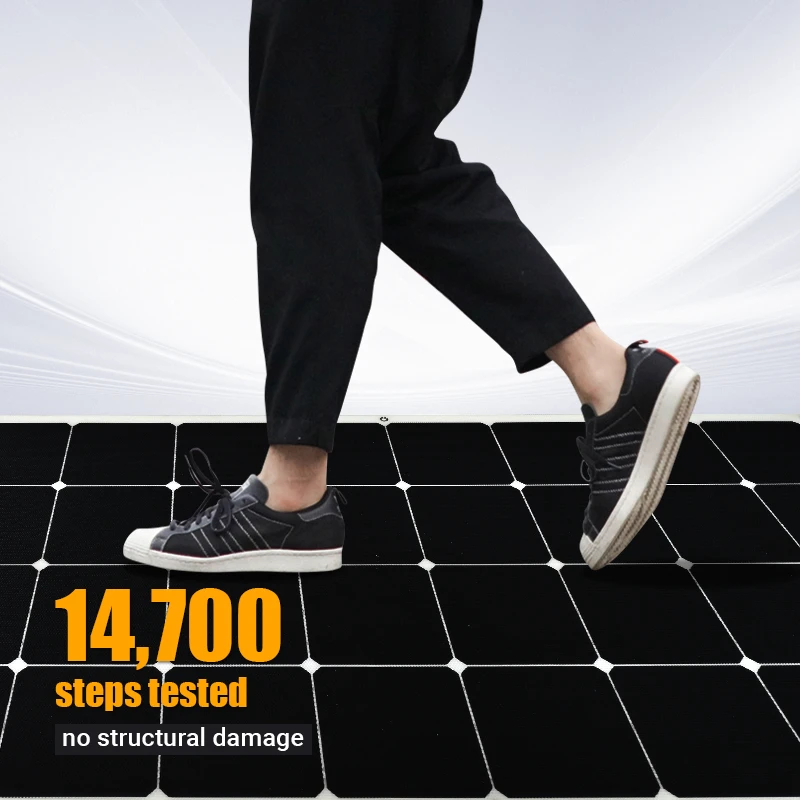
The problem is exacerbated when a technician walks on the roof. Even if you don’t step directly on the module, the shifting weight gives flexibility to the uneven RV substrate. In conventional panels, this localized stress causes the silicone to crack, resulting in:
Invisible Microcracks: Flexible solar panel microcracks These are often invisible to the naked eye but are destructive to electron flow.
Hot Spots: Broken cells create high resistance, creating local overheating and fire hazards.
Power loss: Over time, these cracks widen, causing the silver bus bars to break.
Singold Breakthrough: Preventing Flexible Solar Panel Microcracks with Composite Tech
While some brands try to hide the problem, Singold has developed a structural solution to eliminate the conditions that cause it. Flexible solar panel microcracks.
High tensile polymer matrix support
Instead of a simple plastic backsheet, Singold uses a proprietary multilayer composite matrix. This material acts as a rigid skeletal system. When installed on a curved surface, this layer distributes the mechanical stress evenly, preventing localized stress that would normally occur. Flexible solar panel microcracks.
Symmetric stress distribution
By placing the silicon cell on the “neutral axis” of the panel thickness, we ensure that the actual stress experienced by the silicon is minimized. This design is specifically designed to prevent Flexible solar panel microcracks from forming, even during extreme vibration or roof expansion.
Real-world testing: Reliability of flexible solar panels against microcracks
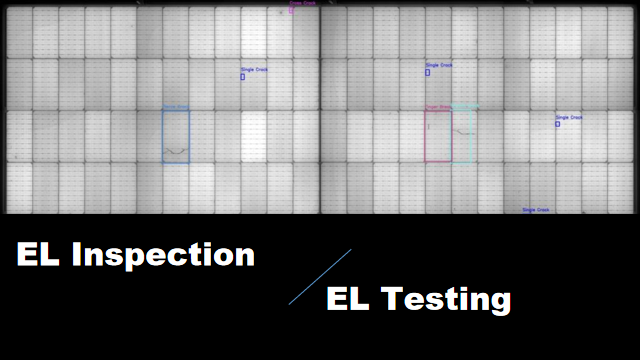
To prove our reliability, we put our composite-backed panels through rigorous electroluminescence (EL) testing—an “X-ray” for solar cells that detects Flexible solar panel microcracks.
Walking simulation: We simulate a 200lb person stepping close to the module. While standard PET-based panels showed up immediately Flexible solar panel microcracksSingold’s composite panels maintained 100% electrical continuity.
Redundant Conductive Grid: Even if a microscopic fracture occurs, our dense mesh conductive grid provides thousands of redundant paths for electrons. This means that, unlike competing products, a small sample size Flexible solar panel microcracks A complete system failure will not result.
Anatomy of a Microcrack: Why Uneven Roofs Are Dangerous
A solar cell is basically a thin wafer of silicon. While silicon is an incredible semiconductor, it is inherently brittle. When a standard flexible panel is forced to conform to an uneven RV roof—characterized by structural ribs, air conditioning shrouds, or aerodynamic slopes—silicone seals are targeted. Stress and compressive stress.
The “walking” problem
RV owners often need access to their roof for cleaning, sealing, or mounting gear. In conventional flexible panels, foot pressure causes a local “dip”. Even if the panel looks fine to the naked eye, the silicon underneath may be scattered in a “spider web” pattern.
The result: hot spots and power loss
Microcracks act like a broken bridge in an electrical circuit. Electricity struggles to cross these fractures, resulting in:
Increase in resistance: This creates localized heat, known as “hotspots”.
Thermal Fatigue: Over time, these hot spots can melt the backsheet or cause the panel to fail completely.
Severe performance degradation: A panel may lose 30-50% of its output despite appearing physically intact.
Singold Solution: Composite Material Support Technology
Many manufacturers try to solve the cracking by using “shingled” seals or thicker plastic. At Singold, our engineers took a different approach. We recognized that the cell needed one. Hard but flexible skeleton to distribute the stress.
Unlike standard PET or thin TPT backsheets, Singold uses Multilayer composite structural support. It’s not just a protective layer. It is an engineered substrate designed to maintain “conductive continuity” even under extreme curvature.
How does the composite support protect the silicone?
Redistribution of stress: Our composite materials are designed with a specific “Flexural Modulus”. When the panel is bent over the curved RV roof, the composite layer absorbs the mechanical stress, preventing the force from reaching the brittle silicon wafer.
Impact flexibility: The high-density mixture acts as a buffer. If a branch hits the panel or a technician steps on it, the composite layer distributes the load over a wide surface area, causing local deflection below the “fracture threshold” of the cells.
Thermal expansion coupling: A major cause of cracking is the different rates at which plastic and silicon expand in the sun. Singold’s composite layers are engineered to have a coefficient of thermal expansion (CTE) that closely matches that of silicon, reducing “internal tug-of-war” during hot days at 85°C.
Maintain conductivity under high rotation
The ultimate test of an off-grid panel is whether it can maintain its rated power while bending. In standard panels, high-degree bending causes the busbars (the silver wires connecting the cells) to stretch, eventually snapping them or pulling them away from the cell surface.
Singold’s exclusive internal interconnection technology Works in sync with comprehensive backing. Using high ductility ribbon connectors and optimized soldering points, our panels ensure that the electrical “highway” remains open, despite a significant ceiling radius.
Real-world reliability: Singold vs. conventional flexible panels
To prove the efficacy of our composite technology, we see Electroluminescence (EL) imaging Results EL testing is similar to X-rays for solar panels.
Conventional panels on curved surfaces: RVs often show “dark cells” or “black lines” within six months of travel, indicating dead zones due to vibration and uneven mounting tension.
Singold Composite Series: Even after years of artificial road vibration and high-degree curvature, the image shows a clear, sparkling image.
Best installation practices for uneven surfaces
Even with Singold’s superior comprehensive support, the method of installation is critical. To maximize the life of your RV solar array, we recommend:
Structural adhesive placement: Use high-quality structural adhesives (such as SikaFlex) in parallel beads rather than large “blobs”. This allows for even pressure distribution.
Avoiding “point loads”: Make sure there are no sharp protrusions (such as bolt heads) on the RV roof directly below the panel.
Air gap considerations: For high-wattage installations, using a thin twin-walled polycarbonate sheet under the panel can provide both additional support and a thermal break.
Frequently Asked Questions: Protecting Your Investment
Q: Can I see flexible solar panel microcracks with my eyes?
A: Generally, no. They require EL (Electroluminescence) imaging to visualize them. If you feel a sudden lightning strike, Flexible solar panel microcracks may be guilty.
Q: Does your composite technology prevent cracks better than shingled seals?
A: Yes, Shangling overlaps cells to handle shade, but Singold’s composite technology protects the physical structure of the cell, thereby addressing the mechanical root cause. Flexible solar panel microcracks.
Q: Can I really walk on Singold flexible panels?
A: While we recommend avoiding unnecessary foot traffic, our composite support panels are designed to withstand occasional, distributed weight (such as a technician’s steps) far better than standard flexible panels. Always wear soft shoes.
Q: How much rotation can these panels handle?
A: Most of our RV-optimized series can safely handle curve radii up to 30 degrees. The composite support ensures that this bending does not translate into cell surface tension.
Conclusion: Trust the science of support.
An RV roof shouldn’t be a problem. By choosing an engineered panel with Comprehensive support technologyyou are moving beyond the critical limits of traditional flexible solar power. Singold Solar provides peace of mind that no matter how rough the road or how crooked the roof, your power will continue.