
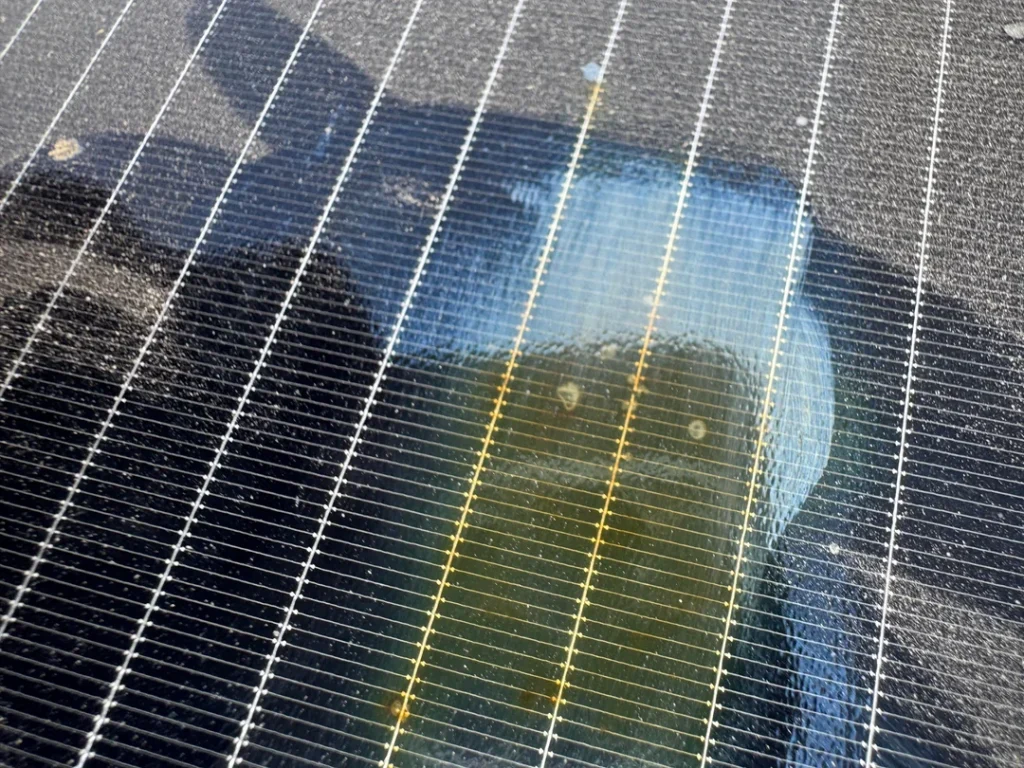
In the solar industry of 2026, “sustainability” has become a double-edged sword. While the push for recycled materials is great, the application of Recycled PET (Polyethylene Terephthalate) A widespread technical defect in solar panel surfaces is known “The Browning Effect.” For off-grid users in high UV environments—such as Australia, South America, or marine applications—this is not just an aesthetic issue. This is a devastating energy loss. But Singold Solarwe have maintained a strict engineering standard: the exclusive use of 100% Virgin ETFE. To understand why, we must look at the molecular science behind the yellowing rate of these two substances.
The chemistry of decay: why PET turns yellow.
PET is a common thermoplastic. When recycled, its molecular chains are already shorter and more prone to “photodegradation”.
UV oxidation loop
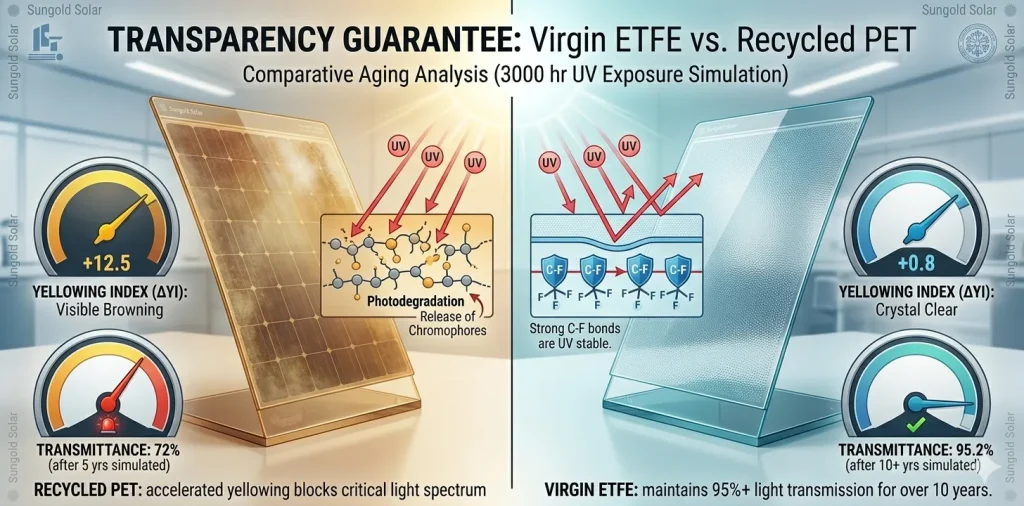
When recycled PET is exposed to intense solar radiation, UV photons break the polymer bonds, creating “chromophores.” These are molecules that absorb blue and violet light, reflecting a sickly yellow or brown color.
-
Recycled PET degradation: Because recycled PET often contains impurities and residual catalysts from its previous life, the yellowing process is accelerated.
-
Transmission loss: As the film is yellow, it acts as a filter. In just 24 months, a recycled PET can lose up to a surface. 15-20% of its light transmissioneffectively turning a 100W panel into an 80W panel.
Virgin ETFE: “self-cleaning” fluoropolymer
On the contrary, Virgin ETFE (Ethylene Tetrafluoroethylene) is a fluoropolymer whose molecular structure is dominated by carbon-fluorine (CF) bonds.
Why is virgin ETFE not yellow?
The CF bond is the strongest bond in organic chemistry. UV photons do not have enough energy to break these bonds.
-
10 Years Description: Singold’s Virgin ETF remains intact. 95% light transmission Even after a decade of exposure.
-
“Virgin” Advantage: By avoiding recycled compounds, we ensure that there are no “weak links” in the polymer chain. This results in a yellowing rate that is practically infinite (Delta YI < 1) over a 10-year period.
Comparative data: 2026 accelerated aging results
Our R&D lab performed a 3,000-hour UV accelerated aging test (approximately 12 years of real-world exposure). The data clearly makes a difference. Yellow rate of recycled PET versus virgin ETFE.
| Performance metrics | Recycled PET (Standard) | Singold Virgin ETF | Impact on energy harvesting |
| Initial delivery | 89% | 96% | Virgin ETFE starts 7% higher. |
| Delivery (after 5 years) | 72% | 95.2% | PET loses ~17% power output. |
| Yellowing Index (ΔYI) | +12.5 (visible brown) | +0.8 (Crystal Clear) | PET blocks important blue spectrum light. |
| Surface texture | break / break | Flexible / smooth | PET cracking leads to moisture ingress. |
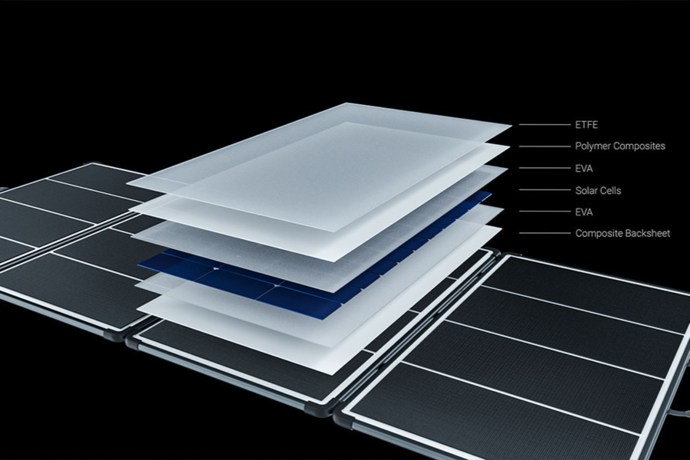
Economic impact: ROI vs initial cost
Many budget-conscious buyers are tempted by recycled PET panels because they are 20-30% cheaper than before. However, K Yellowing rate Creates a hidden “decay tax”.
-
Years 1-2: Panels work the same way.
-
Years 3-5: PET panel yellowing reduces daily Amp-hour harvest. You may need to run your own engine or generator to compensate for the “lost” solar energy.
-
Years 6+: The PET surface becomes brittle and delaminates. The panel must be replaced.
Singold’s logic: Using virgin ETFE, the cost per watt is actually over 10 years. 40% less Because the power output remains constant and the hardware does not need to be changed.
5. Singold’s commitment to “true” sustainability
At Singold, we believe the most sustainable product is you. Never need to throw away. * Longevity as Durability: By extending the lifespan of our flexible panels to 10+ years with Virgin ETFE, we prevent thousands of tons of electronic waste compared to 2-year PET panels.
-
End-of-life reusability: While we use virgin materials for performance, our ETFE is 100% recyclable at the end of its long life, ensuring a circular economy without compromising the energy security of the consumer today.
Frequently Asked Questions: Identifying Content Quality
Q: Can I tell the difference between PET and ETFE by looking at them?
A: New PET is often smooth and shiny. Sungold’s ETFE has a distinct “honeycomb” or “stapled” structure. This texture isn’t just for looks—it reduces reflections and increases light absorption from low angles.
Q: Does “recycled ETFE” exist?
A: It does, but it’s rare. Nevertheless, the recycling process for fluoropolymers can introduce microscopic contaminants that reduce UV stability. That’s why Singold explains. 100% virgin ETFE For all high performance lines.
Q: Why do some panels turn brown in spots?
A: This is often a combination of PET yellowing and EVA (encapsulant) degradation. Singold uses high quality POE (Polyolefin) combined with virgin ETFE to eliminate this “double browning” effect.
Conclusion: Don’t let your power fade away.
When choosing between Recycled PET vs. Virgin ETFEThe science is clear. offers a temporary discount; The second presents a decade of energy independence.
A yellowing solar panel is a clear indication of a dying system. By insisting on virgin ETFE, Singold Solar ensures that your panels are as clear—and as powerful—at 3,000 days as they were that day.