
Navigating the global solar supply chain is not for the faint of heart. If you’re a procurement manager, solar distributor, or project developer, you already know that raw material prices and freight rates are only part of the equation. Today, it’s one of the most important variables affecting your bottom line. AD/CVD (Anti-Dumping and Countervailing Duties).
With changes in international trade policies and ongoing investigations by institutions such as the US Department of Commerce (DOC), understanding AD/CVD is no longer just for trade lawyers—it’s an essential survival skill for solar sourcing.
In this guide, we’ll break down what AD/CVD means, how it directly increases your solar panel costs, and what strategic steps you can take to mitigate these risks.
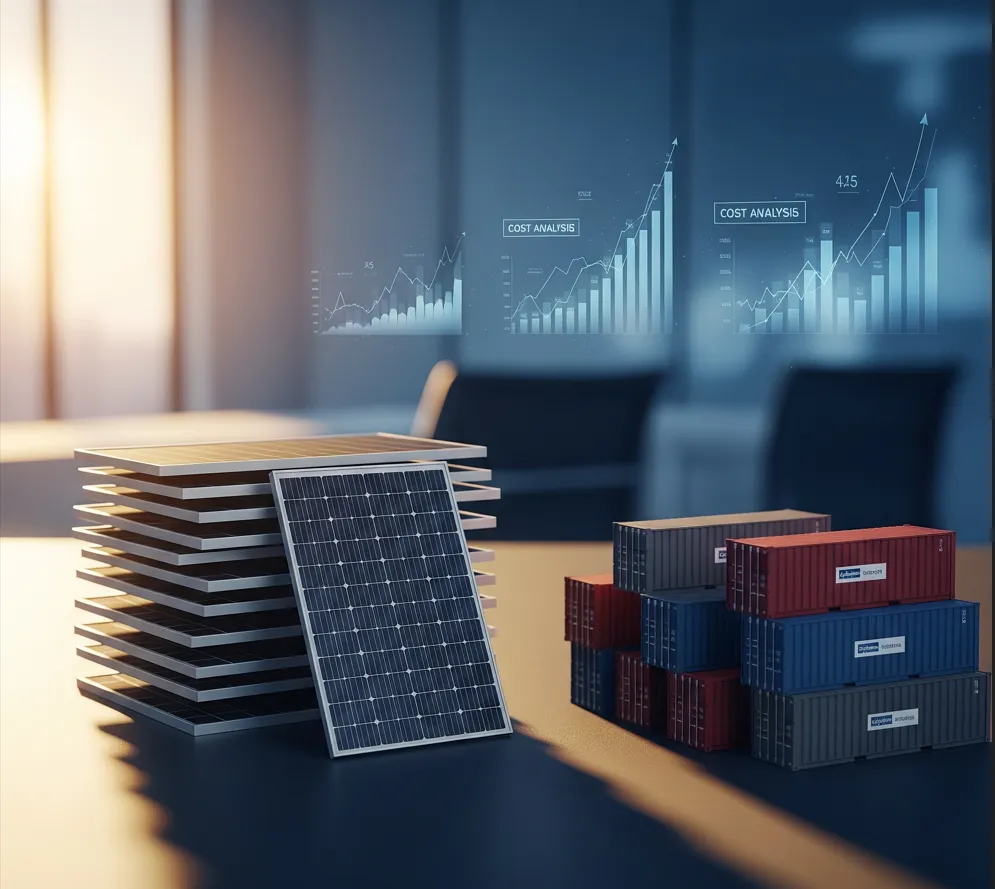
What are AD/CVD tariffs?
Before diving into the financial implications, let’s clarify the terminology. AD/CVD are trade defense mechanisms used by governments to protect domestic manufacturing industries from unfair foreign competition.
Anti Dumping (AD): These duties apply when foreign manufacturers sell solar panels in the importing country at prices significantly below their “fair market value”.
Countervailing Duties (CVD): These are tariffs imposed to offset the unfair advantage of foreign manufacturers who receive substantial financial subsidies from their home governments.
Key Takeaway: When combined, AD/CVD tariffs can add double-digit or even triple-digit percentage markups to the base cost of imported solar modules, fundamentally disrupting project budgets.
Direct and indirect impacts on your sourcing costs
How do these trade policies affect your procurement budget? The effects ripple throughout the supply chain, creating obvious price increases and hidden operational costs.
1. Direct Tariff Markups
The most obvious impact is the tax. If you source panels from a region currently under an AD/CVD order, the importer of record is responsible for paying these duties on arrival at the port. Depending on the manufacturer and country of origin, these tariffs can range from a nominal 15% to a staggering 250%+. This immediately increases your cost of land, directly eats into your profit margin or forces you to pass costs on to your end customers.
2. Supply chain disruptions and delays
When an AD/CVD investigation is announced, the supply chain is often frozen. Manufacturers can stop shipments to avoid previous duties, and customs agencies can stop shipments at the border for lengthy inspections.
Cost Impact: Time is money. Project delays can lead to broken contracts, lost incentives and increased warehousing costs.
3. Compliance and Legal Overhead
To avoid tariffs, buyers often require extensive traceability documentation from manufacturers to prove that the polysilicon, wafers, and cells used in their panels were not sourced from restricted areas. Managing this paperwork requires dedicated legal and compliance resources.
Strategic Sourcing: How to Reduce AD/CVD Risks.
While you can’t control global trade policies, you can control your purchasing strategy. Here’s how smart shoppers are protecting their solar sourcing costs:
Diversify your supply chain: Sourcing from just one country leaves you extremely vulnerable to sudden tariff announcements. Build relationships with manufacturers in various regions to ensure a consistent flow of inventory.
Demand Supply Chain Transparency: Partners with manufacturers who can provide full traceability from quartz to module. Compliant manufacturers will have detailed bills of materials (BOM) ready for customs review.
Focus on value rather than “rock bottom” value: Shifting your focus from Lowest upfront cost To Lowest cost of land (which factors in reliability, compliance, efficiency, and zero tariff risk) will save you money in the long run.
The reality of US tariffs on Chinese solar products
For U.S. buyers, implementing these mitigation strategies is more important than ever, as sourcing directly from China has become increasingly complex and prohibitively expensive. Beyond standard AD/CVD, solar imports from China are severely affected. Section 301 Tariffwhich significantly increases the cost of solar cells and modules.
Additionally, the US Department of Commerce heavily scrutinizes traditional Southeast Asian manufacturing hubs—especially Cambodia, Malaysia, Thailand, and Vietnam—for allegedly circumventing China’s AD/CVD tariffs. For procurement managers, this creates a minefield of compliance risks, backlogs, and delayed deliveries. Traditional “cheap sourcing” avenues are effectively closed or fraught with financial risk.
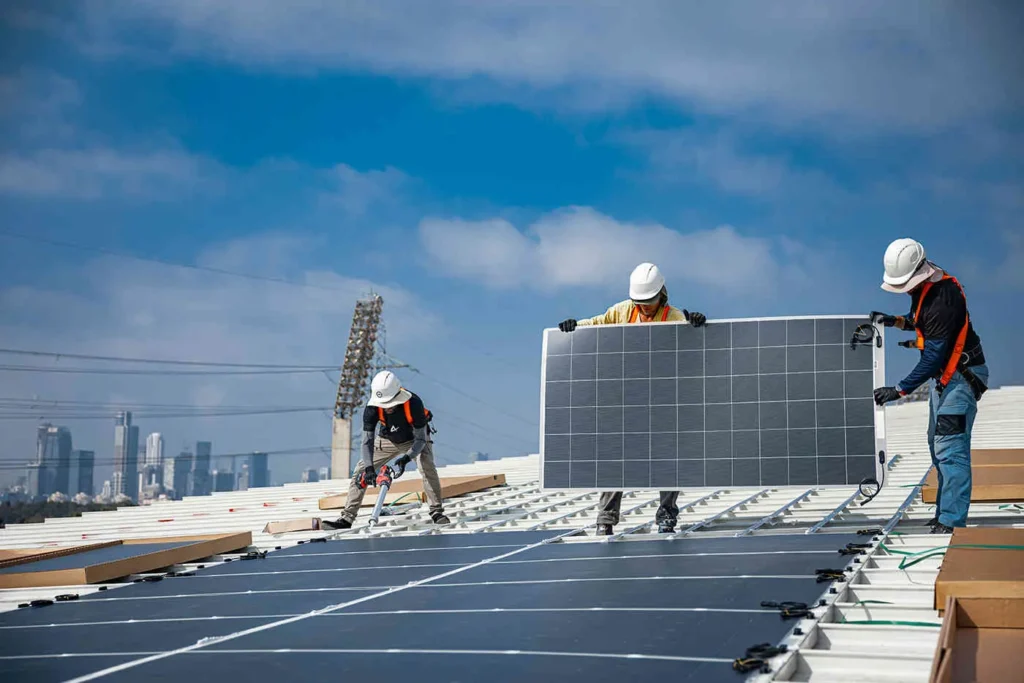
Singold Solar Solutions: Strategic Advantage of Our Indonesia Factory
To navigate this volatile trade environment, smart sourcing requires a “China+1” manufacturing strategy that prioritizes compliance and tariff-exempt origin. This is the place. Singold Solar’s state-of-the-art manufacturing facility in Indonesia Provides a distinct, competitive edge for our global B2B partners.
By moving key production capabilities to Indonesia, Singold Solar offers a robust solution for this. AD/CVD Crisis:
Ignoring Penal Tariff: Products manufactured and exported at our Indonesia facility are not subject to punitive Section 301 tariffs or direct AD/CVD rates applicable to Chinese-origin panels. This immediately reduces your land costs and protects your profit margins.
Outside Circumvention Cross-shires: Unlike the “Southeast Asia 4” countries, Indonesia remains a stable, low-risk manufacturing hub. Sourcing from our Indonesian plant minimizes the risk of your shipment being caught up in an extensive investigation.
Uncompromised Traceability: Evidence of commercial compliance is required. Our Indonesia facility is built on transparent supply chain management. We provide clean, verifiable Bills of Materials (BOMs) ensuring that upstream components meet US import regulations, including UFLPA compliance.
Cost Effective Quality: You don’t have to sacrifice quality for compliance. Our Indonesian factory reflects the strict quality control, automated production lines, and high efficiency of our core operations, providing premium solar panels at competitive global prices.
Secure your supply chain with Singold Solar
In a scenario where AD/CVD and trade tariffs can wipe out project profitability overnight, where How your panels are made is just as important. how They are made.
At Singold Solar, we believe that forecasting is the foundation of a successful solar business. Whether you’re supplying flexible solar panels for marine and RV applications, portable kits for off-grid retail, or custom rigid panels for special projects, you need a partner that prioritizes supply chain integrity.
Our strategic investment in Indonesian manufacturing is specifically designed to protect our U.S. and global partners from supply chain shocks. We provide the predictability, compliance, and competitive pricing you need to safely scale your solar business.
Contact the Singold Solar team today to learn more about our Indonesian manufacturing capabilities and secure your tariff-free supply chain.