
In the controlled environment of a laboratory, every solar panel looks like a winner. Standard test conditions (STC) assume perfectly clear skies, 1000W/m² of irradiance, and zero obstructions. But the real world is messy. To a sailor, it is the shadow of one. Sailboat mast Sweep across the deck. For Van Liefer, it is. An overhanging branch Of the pine tree at the camp site.
When choosing a solar system, most consumers focus on peak wattage. However, the metric that truly defines your off-grid independence isn’t peak power. Shading tolerance versus daily energy yield. But Singold SolarWe’ve gone beyond marketing claims to estimate how much “wasted” energy our optimized bypass diode technology can save in complex environments.
The “Christmas Light” Problem: Why a Little Shadow Kills a Lot of Power
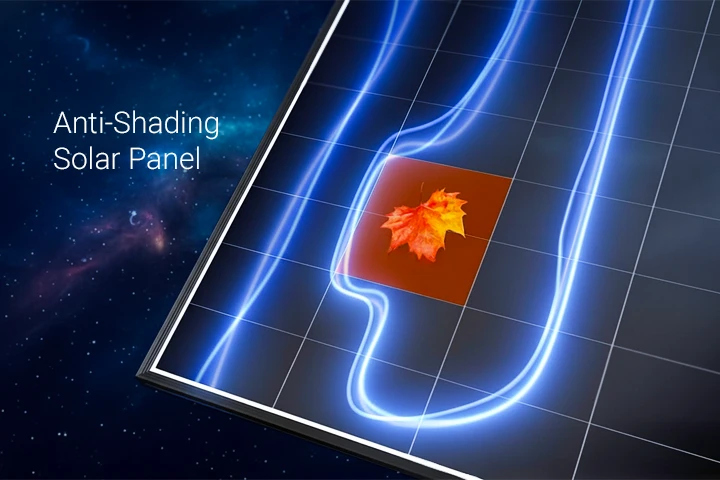
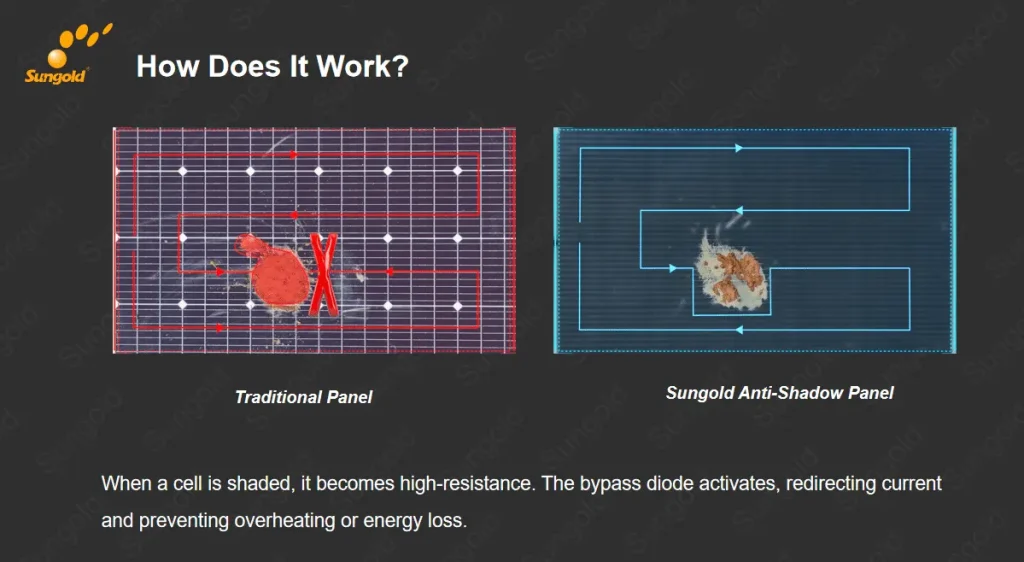
Conventional solar panels are wired into “doors”. Like old-fashioned Christmas lights, if one bulb (or solar cell) goes dark, the entire string is damaged. When the shadow falls on the par. 10% Of a standard panel, shaded cells become highly resistive. They don’t just stop generating electricity. They actually start Usage This is turning into “hot spots”.
Without development Shading tolerancethe shadow of a mast can drop the output of a 100W panel to near zero. This is where the difference between the theoretical performance and the actual one lies. Daily energy harvest becomes a ditch.
AI simulation: Amount of “saved” energy
To provide transparent data to its customers, Singold engineers used AI-powered shading simulation models. We compared a standard 100W flexible panel with a Singold PA621 Series Module equipped with our custom bypass diode configuration.
Scenario A: Moving Mast (Marine Environment)
-
obstacle: A narrow vertical shadow (the mast) moves across the panel at a speed of 15° per hour.
-
Standard Panel Result: The shade triggers a “choke point” by severing all internal wires. Total Daily Crop: 280Wh.
-
Singold Optimized Result: Our diodes allowed current to “bypass” only certain shaded cells, keeping 70% of the panel active. Total Daily Crop: 410Wh.
-
Benefit of crop: Oh 46% increase. in usable energy per day.
Scenario B: Dappled Forest (RV/Overland)
-
obstacle: Random “sparked” shadow from tree leaves covers about 20% of the surface area.
-
Standard Panel Result: The constant fluctuating voltage caused the MPPT controller to “hunt” for power, resulting in massive instability. Total Daily Crop: 190Wh.
-
Singold Optimized Result: Sophisticated diode placement minimizes resistance. Total Daily Crop: 315Wh.
-
Benefit of crop: Oh A 65 percent increase In reliability during peak camping times.
3. Beyond the diode: Singold’s integrated shading strategy
While bypass diodes are a “hardware” solution, Shading tolerance versus daily energy harvest Cell configuration and material science are also the result.
Parallel circuit architecture
Most panels use a simple series connection. Uses Singold’s high performance lines. Multi-parallel internal architecture. By dividing the panel into more independent zones, a shadow on the lower left corner has zero electrical effect on the upper right corner.
Low light response (spectral sensitivity)
Shading is not always a strict “black” shade. It often diffuses light (cloudy days or reflected light). Singold uses high-purity monocrystalline cells with increased spectral sensitivity, ensuring that even in “shade-adjacent” conditions, Daily energy harvest Remains above the industry average.
Economic impact: ROI in the shade
When you evaluate Shading tolerance versus daily energy harvestyou are evaluating the return on your investment.
-
Case Study: A 400W system on a yacht.
-
If the system is not optimized for shade, you can just net. 1.2kWh On a typical sunny but obstructed day.
-
With Singold’s optimized system, the same achieves a 400W footprint. 1.8kWh.
30 days of travel, that extra 18kWh There is a difference between running your refrigerator 24/7 and starting your engine to charge your batteries.
FAQ: Optimizing Your Crop
Q: Does shading tolerance matter if I only park in full sun? A: Absolutely. Even “full sun” includes shades powered by roof vents, air conditioners, or antennas. Small shadows make the most frequent lightning drops.
Q: Can I solve shading problems with a better MPPT controller? A: An MPPT controller helps, but it can only work with the power that the panel provides. If the internal resistance of the panel is high due to faulty Shading toleranceEven the best controller cannot “find” the missing energy.
Q: How do I know if my panel has optimized bypass diodes? A: Check the junction box specifications. The single gold panels clearly list the number and type of diodes used. For complex environments, we recommend our HP and TF series For more Daily energy harvest.
Q: Does shingle technology help with shading? A: Shingled panels (like our exclusive series) offer even better tolerances because they eliminate the bus bars that normally act as barriers. Combined with optimized diodes, they offer the highest possible shading flexibility.
Conclusion: Don’t let the shadows steal your power.
In the off-grid world, you don’t live in a lab. You live under trees, along masts and under passing clouds. When comparing Shading tolerance versus daily energy harvestthe winner is clear: the panel that can “think” its way around an obstacle.
But Singold SolarWe don’t just make panels. We create energy security. By choosing a system designed for “real world shade” you ensure that your crop is always as high as the sun will allow.